
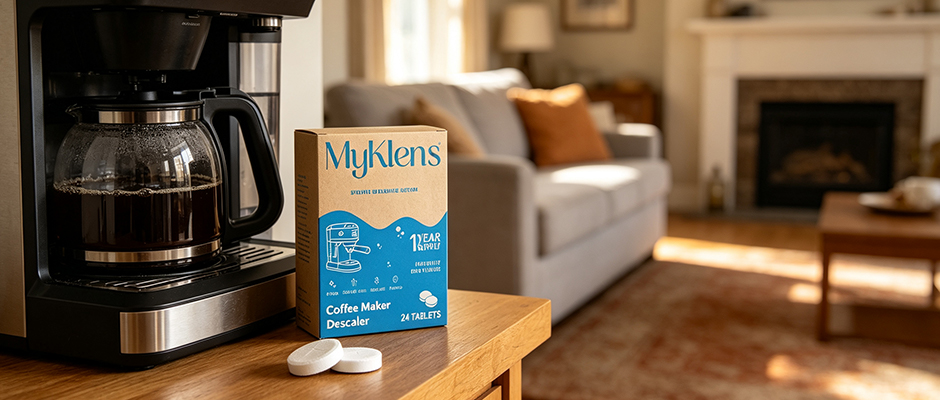
The global coffee machine maintenance market continues expanding as commercial and consumer coffee equipment adoption grows worldwide. For distributors and purchasing managers, coffee descaling tablets wholesale represent a recurring-revenue product category with strong reorder rates and stable demand cycles.
This guide addresses key procurement considerations for bulk coffee descaling tablet sourcing, covering manufacturing capabilities, customization options, and supply chain optimization strategies that directly impact your landed costs and market positioning.
H2: Understanding Bulk Coffee Descaling Tablet Specifications
H3: Active Ingredient Formulations for Different Market Segments
When evaluating coffee descaling tablets suppliers, understanding formulation differences is critical for target market alignment:
Citric acid-based tablets: 15-20% concentration, suitable for consumer-grade automatic machines, lowest manufacturing cost per unit
Sulfamic acid formulations: 25-30% concentration, preferred for commercial espresso equipment, higher efficacy ratings
Organic acid blends: Premium positioning, meets EU eco-label standards, 18-25% price premium in retail channels
Bulk order implications: Minimum order quantities (MOQs) typically decrease 40-60% when committing to single-formulation orders of 500kg+ raw material equivalent.
H3: Tablet Form Factors and Packaging Considerations
Standard wholesale configurations include:
Individual foil-wrapped tablets: 2g, 3g, 4g weights (2g standard for home machines, 4g for commercial)
Bottle packaging: 10-count, 30-count, 60-count configurations
Institutional bulk packs: 100-500 tablet canisters for B2B clients
Cost structure insight: Foil wrapping adds $0.008-$0.015 per tablet but extends shelf life to 36+ months versus 18 months for bottled products—critical for distributors managing inventory turnover.
H2: OEM/ODM Capabilities: Building Your Private Label Program
H3: White Label Coffee Descaling Tablets Manufacturing
Established coffee descaling tablets manufacturers typically offer three partnership tiers:
Standard White Label
Existing formulations with your branding
MOQ: 5,000-10,000 units (finished goods)
Lead time: 15-25 days post-artwork approval
Tooling costs: None
Custom Formula OEM
Modified acid concentrations or additive profiles
MOQ: 20,000-50,000 units
Lead time: 35-45 days (includes stability testing)
Development fee: $800-$2,500 (often waived at volume commitments)
Full ODM Development
Proprietary formulations, unique tablet shapes, specialized packaging
MOQ: 100,000+ units
Lead time: 60-90 days
Investment: $5,000-$15,000 (mold tooling, certification testing)
H3: Packaging Customization Options
For bulk coffee descaling tablets orders, packaging flexibility directly impacts shelf presence:
Custom bottle molding (MOQ 50,000 units)
Multi-language label printing (no MOQ increase for 2-4 languages)
Retail-ready display packaging (adds $0.30-$0.75 per unit)
E-commerce optimized packaging (frustration-free, reduced dimensional weight)
Procurement strategy: Combine standardized inner packaging with customized outer sleeves to reduce MOQs by 60% while maintaining brand differentiation.
H2: Production Capacity and Supply Chain Stability
H3: Evaluating Manufacturer Production Capabilities
When sourcing coffee descaling tablets in bulk, assess these operational metrics:
Capacity IndicatorMinimum ThresholdPreferred RangeMonthly output50,000 units200,000+ unitsFormulation lines2+ dedicated lines4+ linesQuality certificationsISO 9001ISO 9001 + GMPRaw material inventory30-day buffer60-90 day buffer
Risk mitigation: Suppliers maintaining 60+ day raw material stocks demonstrate superior resilience against citric acid or sulfamic acid price volatility (which fluctuated 35% in 2023).
H3: Seasonal Demand Planning for Distributors
Coffee descaling product demand follows predictable patterns:
Q4 spike: 40-60% volume increase (holiday coffee machine sales)
Q1 secondary peak: 25-30% increase (gift redemption, new machine registrations)
Q2-Q3 baseline: Standard reorder cycles
Wholesale purchasing strategy: Negotiate Q2-Q3 production slots at 8-12% discounts while securing guaranteed Q4 capacity allocations in supplier contracts.
H2: Cost Optimization: Total Landed Cost Analysis
H3: FOB Pricing Structures for Volume Tiers
Typical coffee descaling tablets wholesale price brackets from Asian manufacturers:
5,000-19,999 units: $0.35-$0.52 per unit (FOB)
20,000-49,999 units: $0.28-$0.38 per unit (FOB)
50,000-99,999 units: $0.22-$0.30 per unit (FOB)
100,000+ units: $0.18-$0.25 per unit (FOB)
Pricing based on 3g citric acid tablets, standard bottle packaging
H3: Logistics and Freight Considerations
Containerization efficiency:
20ft container: 180,000-220,000 units (depending on packaging density)
40ft container: 380,000-450,000 units
LCL threshold: Below 8,000 units, air freight may offer better total cost
Tariff classifications: Most coffee descaling tablets fall under HS Code 3402.20 (organic surface-active agents) with duty rates of 2.4-6.5% (US/EU), though formulation specifics affect classification.
Hidden cost factors:
Hazmat classification for certain formulations (adds $150-$400 per shipment)
Climate-controlled storage requirements (10-15% premium on 3PL rates)
Shelf-life considerations for inventory carrying costs
H2: Quality Assurance and Compliance for International Markets
H3: Essential Certifications for Global Distribution
Minimum compliance requirements:
EU markets: REACH registration, CLP labeling compliance, safety data sheets
North America: FDA compliance (if marketed with machine contact claims), proper hazard labeling
Australia/NZ: AICS registration, TGA compliance for certain claims
Supplier verification: Request copies of third-party test reports for:
Heavy metal content (lead, cadmium, mercury <1ppm)
Microbiological safety (total plate count <100 CFU/g)
Active ingredient potency (±5% of stated concentration)
H3: Shelf Life and Storage Specifications
Standard stability data from coffee descaling tablets bulk suppliers:
Foil-wrapped: 36 months (stored at <25°C, <60% RH)
Bottle with desiccant: 24 months
Bulk institutional packs: 18 months
Inventory management: Products with 18+ month remaining shelf life maintain full wholesale value; 12-18 month remaining typically require 15-25% discounting.
H2: Building Strategic Supplier Relationships
H3: Due Diligence Checklist for New Suppliers
Before committing to bulk coffee descaling tablets orders:
Factory audit (virtual minimum, in-person preferred for orders >$50k)
Reference verification from 2-3 current distributors in non-competing regions
Sample testing at independent labs (cost: $300-$800, essential for quality baseline)
Payment term negotiation (30% deposit, 70% against B/L copy is standard; push for 60-day terms at proven volume)
Contractual protection for formula confidentiality (especially ODM projects)
H3: Long-Term Partnership Advantages
Committed volume partnerships with coffee descaling tablet manufacturers typically unlock:
Quarterly price reviews (vs. per-order pricing) protecting against 15-20% fluctuations
Dedicated production windows guaranteeing lead times during peak seasons
Co-marketing support including product photography, specification sheets, and claims substantiation
New product preview access for 60-90 days before general release
Volume commitment benchmarking: Annual contracts of 500,000+ units typically secure Tier-1 partnership status with most mid-size manufacturers.
H2: Market Positioning and Channel Strategy
H3: Retail vs. Commercial Channel Considerations
Coffee descaling tablets wholesale pricing must account for channel economics:
Retail distribution path:
Manufacturer → Distributor (40-50% margin) → Retailer (35-45% margin) → Consumer
Required landed cost: <25% of MSRP for sustainable distribution
Commercial/B2B path:
Manufacturer → Distributor (25-35% margin) → Service companies/Coffee suppliers (20-30% margin) → End user
Higher volume per customer, lower marketing costs, predictable reorder cycles
Strategic insight: Dual-channel distributors should consider separate SKUs with differentiated tablet counts (30-count retail vs. 100-count commercial) to minimize channel conflict.
H3: Competitive Differentiation Through Product Bundling
Value-added approaches for bulk coffee descaling tablet distributors:
Machine-specific kits: Descaling tablets + cleaning tablets + water filters (20-35% basket value increase)
Subscription-ready packaging: Pre-portioned quantities matching recommended descaling intervals (every 3/6 months)
Professional service packages: Bulk tablets + technical training + point-of-sale materials
H2: Emerging Trends Affecting Procurement Decisions
H3: Sustainability and Eco-Friendly Formulations
Market shift indicators:
28% CAGR in "eco-friendly descaler" search volume (2021-2024)
Major coffee machine brands adding sustainability requirements for authorized accessories
Retail chains implementing packaging reduction mandates (15-30% material reduction targets)
Sourcing implications:
Biodegradable packaging options add $0.05-$0.12 per unit
Phosphate-free formulations (now standard in EU) may require formula adjustments for other markets
Carbon-neutral shipping programs emerging as retailer requirements (1-3% freight premium)
H3: Smart Packaging and Track-and-Trace
Forward-looking coffee descaling tablets suppliers now offer:
QR codes linking to usage instructions (video content increases proper usage by 40%)
Batch-level traceability for quality issue resolution
NFC tags for anti-counterfeiting (relevant for premium brands in high-counterfeit markets)
Investment consideration: Smart packaging features add $0.08-$0.20 per unit but can support 15-25% premium positioning in developed markets.
H2: Risk Management in Bulk Procurement
H3: Quality Consistency Across Production Runs
Implement these controls when ordering coffee descaling tablets in bulk:
Retain samples from each production batch with date codes
Establish clear acceptance criteria (tablet weight ±0.1g, dissolution time specifications)
Third-party inspection for orders >$30,000 (cost: $250-$400, identifies 80%+ of issues pre-shipment)
Graduated payment releases tied to inspection milestones for first 2-3 orders with new suppliers
H3: Currency and Price Fluctuation Hedging
For ongoing wholesale coffee descaling tablets programs:
Fixed-price contracts: Lock pricing for 6-12 months at volume commitment (typically requires 20% premium over spot pricing)
Raw material indexing: Price adjustments tied to published citric/sulfamic acid indices (±10% bands common)
Currency forwards: Hedge 60-80% of expected annual spend if sourcing in CNY/EUR/other non-domestic currencies
Conclusion: Next Steps for Qualified Distributors
Strategic sourcing of coffee descaling tablets bulk requires balancing unit economics, quality assurance, supplier reliability, and market positioning. Successful distributors approach this category with:
Clear target market definition (retail vs. commercial focus)
Realistic volume projections (factoring 18-24 month inventory turns)
Differentiation strategy (price leadership vs. premium positioning vs. bundled solutions)
Supplier diversification plan (primary + backup for orders >$100k annual)
Request Your Customized Quote Package
For qualified distributors and purchasing managers, we provide:
✓ Sample product kits (3-5 formulation options with your market specifications)
✓ Volume-tiered pricing (FOB, CIF, and DDP options available)
✓ OEM/ODM capability documentation (lead times, MOQs, customization catalog)
✓ Compliance package (certifications, test reports, safety data sheets)
✓ Supply chain analysis (lead time scenarios, container optimization)
Minimum qualification: Established distribution network with documented coffee/appliance category experience or verified purchase orders indicating 10,000+ unit annual volume potential.
Contact our B2B procurement team:
Submit your company profile and specific requirements through our distributor application portal. Qualified inquiries receive detailed quotations within 48 business hours, including sample shipment via express courier (3-5 day delivery to major commercial centers).