
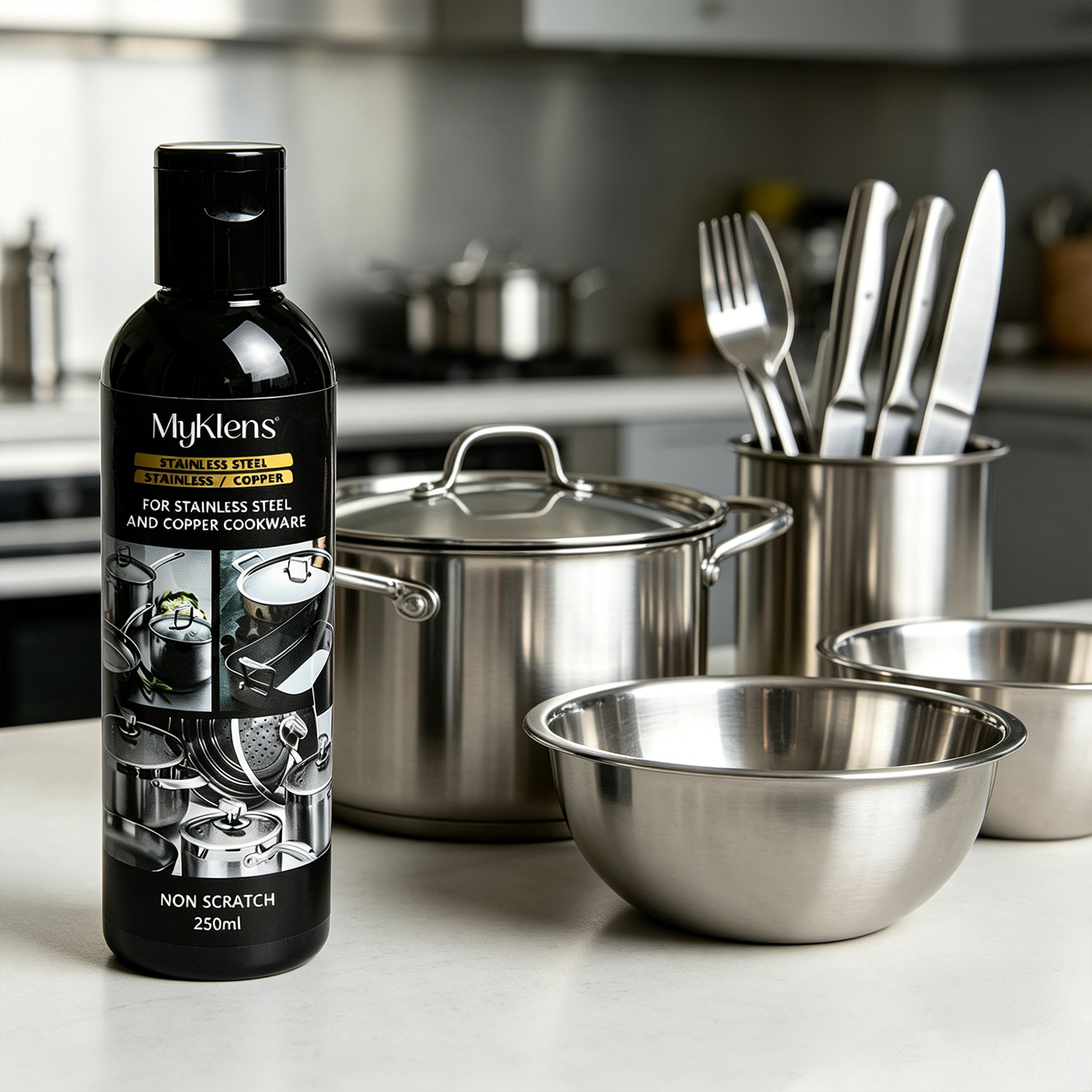
Yet, they come with a notorious reputation. Within days, that flawless showroom finish is often compromised by a chaotic mosaic of biometric grease (fingerprints), hard water spots, and pet smudges.
If you’re frustrated by cleaners that leave cloudy streaks or require exhausting buffing, the problem isn’t your effort—it’s the chemistry.
Today, we are moving beyond basic cleaning tips to explore the actual metallurgy of stainless steel, why traditional cleaners fail, and the scientifically proven method to restore and protect your appliances.
The Invisible Shield: Understanding the "Chromium Oxide" Layer
To master stainless steel care, you must understand what makes it "stainless."
Unlike regular steel, stainless steel contains a minimum of 10.5% chromium. When exposed to oxygen, this chromium forms a microscopic, invisible layer of Chromium Oxide on the surface. This "passivation layer" is what actively prevents rust, corrosion, and dullness.
Here is the critical problem: When you use harsh household cleaners, acidic solutions (like vinegar), or abrasive sponges, you are microscopically stripping away this protective chromium oxide layer. Over time, this leaves your appliances vulnerable to micro-rusting (tea-staining) and permanent dullness.
You aren’t just cleaning metal; you are maintaining a delicate chemical barrier.
The Three Enemies of Stainless Steel
Before applying any product, it’s vital to identify what you are battling. Different stains require different chemical reactions:
Biometric Lipids (The Fingerprints): Human skin produces sebum (oil). When mixed with sweat and kitchen dust, it creates a sticky, acidic residue that etches into the metal's "grain" (the microscopic brushed lines). Water cannot break down these lipids; it only smears them.
Mineral Deposits (Water Spots): Drips from your water dispenser contain calcium and magnesium. As the water evaporates, it leaves behind stubborn alkaline mineral scaling.
The "Greasy Cloud" (Leftover Cleaner): The most common cause of streaks is actually the wrong cleaner. Generic multi-surface sprays and dish soaps leave a surfactant residue that acts like a magnet for new dust and oils.
The Formulation Secret: Why Most Cleaners Fail
Walk down any grocery store aisle, and you'll find dozens of "stainless steel wipes" and sprays. Most of them rely on heavy mineral oils.
While mineral oil creates a temporary, shiny illusion, it never fully dries. It leaves a greasy, wet film that actually attracts dust and makes the next fingerprint look twice as bad.
The Solution: Advanced Emulsification + Oleophobic Protection
To genuinely care for premium appliances, a formula must be engineered with three specific chemical properties. This is the precise architecture behind [Insert Your Product Name]:
Lipid Emulsifiers: Instead of smearing grease, our plant-derived surfactants instantly encapsulate and lift body oils and cooking splatters out of the metal’s microscopic grain.
pH-Balanced Evaporation: Our formula is calibrated to evaporate quickly and evenly, ensuring zero chemical residue is left behind. This is the secret to a true streak-free finish.
Oleophobic Polymer Barrier: This is where the magic happens. [Insert Your Product Name] deposits a microscopic, non-greasy shield that naturally repels human oils and water. It doesn't just clean; it actively resists tomorrow's smudges.
The Masterclass: A 3-Step Pro-Level SOP
Throw away the paper towels (which cause micro-scratches) and grab a high-quality, plush microfiber cloth. Here is the definitive routine for a flawless finish:
Step 1: Map the Grain
Look closely at the surface of your appliance. You will see faint brushed lines running either horizontally or vertically. Never clean in circles. Circular motions push microscopic dirt into the grooves, causing multi-directional light refraction (which your eyes perceive as streaks).
Step 2: The Two-Towel Method
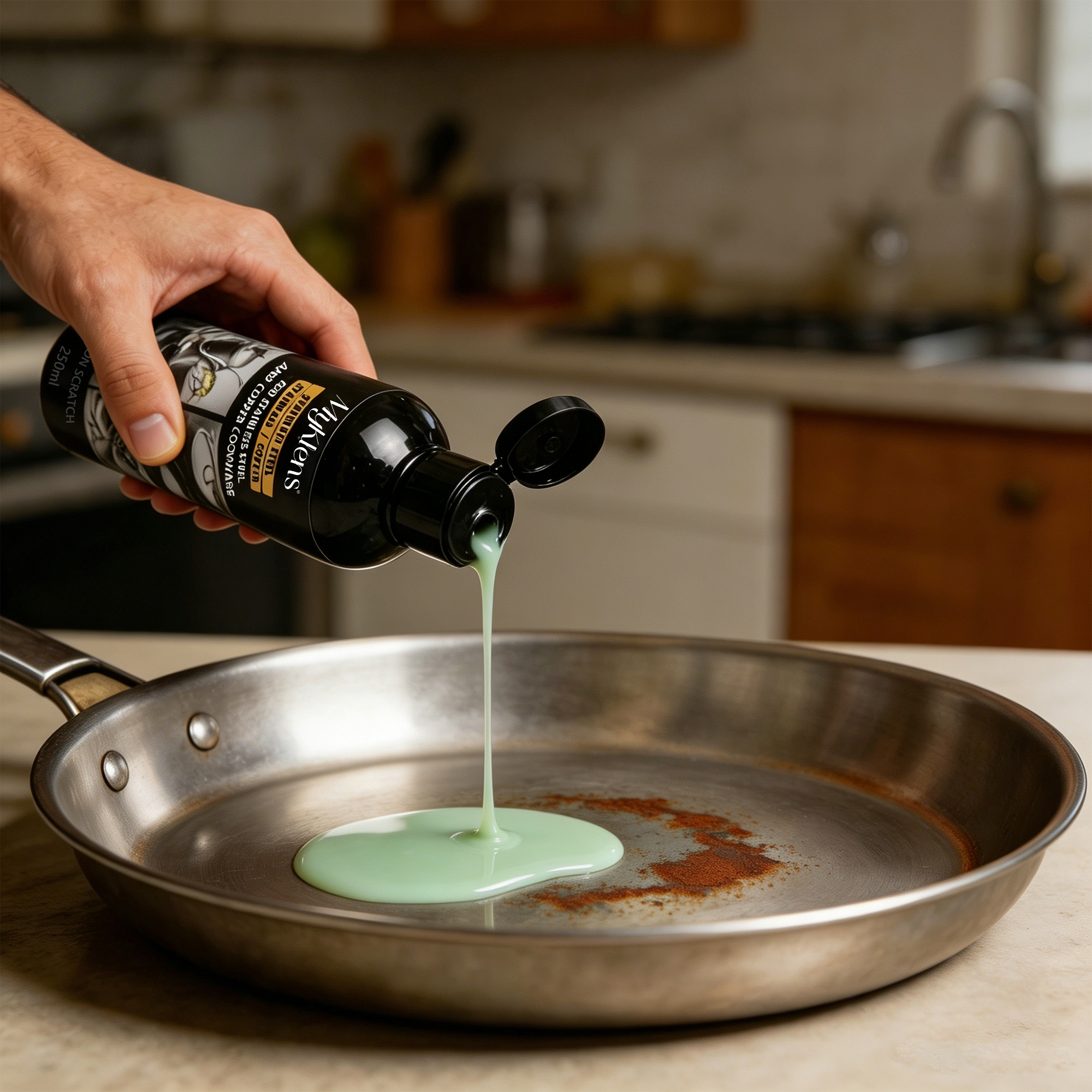
Mist [Insert Your Product Name] sparingly onto a clean microfiber cloth (not directly onto the appliance, to avoid overspray on floors). Firmly glide the cloth in long, even strokes exactly parallel to the grain. Watch the oxidation and grease lift instantly.
Step 3: The "Dry Buff" Activation
Immediately take a second, completely dry microfiber cloth. Vigorously buff the surface, again following the grain. This friction generates slight heat, which activates our protective oleophobic polymers, bonding them to the metal for a lasting, mirror-like defense.
Protect Your Investment
Your kitchen appliances work hard, but keeping them pristine shouldn't be hard work. By respecting the metallurgy of the stainless steel, avoiding residue-heavy generic sprays, and utilizing a scientifically formulated protector, you can maintain that luxury, day-one aesthetic effortlessly.
Experience the Science of Shine.
Don't let fingerprints cheapen your kitchen. Upgrade to the professional standard with [myklens.com/en/product/Stainless-Cleane].