
Let's Talk About What We've Been Accepting
Here's something worth considering: the way most of us clean our clothes is objectively absurd.
Those giant plastic containers cluttering our homes? North Americans discard approximately one billion pounds of these bottles annually. The majority never get recycled properly because residual soap contaminates recycling facilities. They accumulate in waste sites, persisting for centuries.
But environmental concerns represent only one dimension of this problem.
The Everyday Frustrations We've Normalized
The Guessing Game: Be honest—when was the last time you precisely measured your detergent? Research from consumer behavior analysts reveals that nearly 70% of households consistently use excessive amounts, either pouring freely or trusting cap measurements that manufacturers intentionally design to encourage waste.
The Physical Burden: Standard detergent containers can weigh upward of twelve pounds when filled. For elderly users, individuals managing mobility challenges, or anyone navigating stairs with groceries, this creates genuine difficulty.
The Storage Battle: Examine your laundry area or storage cupboards. Those oversized containers probably dominate valuable space that could serve better purposes.
The Travel Nightmare: Ever attempted bringing liquid soap on a vacation? Between airline liquid restrictions and the genuine risk of catastrophic suitcase explosions, it's virtually impossible.
Discovering the Alternative: Detergent in Sheet Form
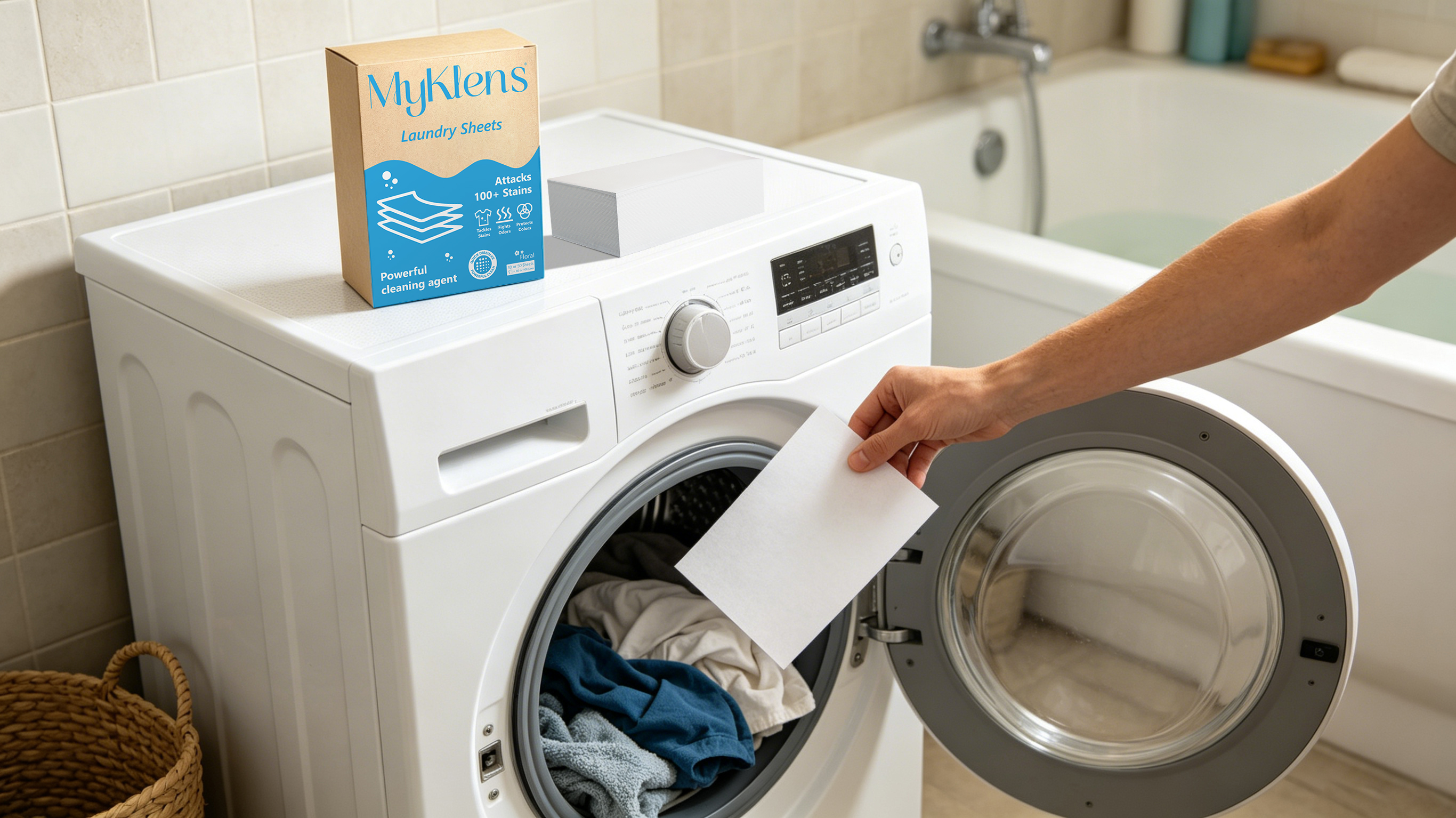
Laundry detergent sheets—also marketed as eco strips or washing sheets—are precisely what the name suggests: ultra-thin, pre-portioned squares of concentrated cleaning formula that completely dissolve when exposed to water.
My initial reaction upon seeing one? Complete skepticism. This flimsy piece of material, barely thicker than tissue, was meant to replace those massive bottles? It seemed like clever marketing rather than genuine innovation.
Then I actually tested them.
The Experimental First Wash
For my inaugural trial, I deliberately chose my most challenging scenario: athletic gear belonging to my partner. Anyone sharing living space with someone who exercises intensively understands this challenge. We're discussing synthetic materials that capture and hold odors, garments subjected to extreme conditions, and various mysterious discolorations.
I placed one sheet directly into the washing drum, added the clothing, and initiated a cold-water cycle. Walking away, I experienced that familiar doubt: This cannot possibly work.
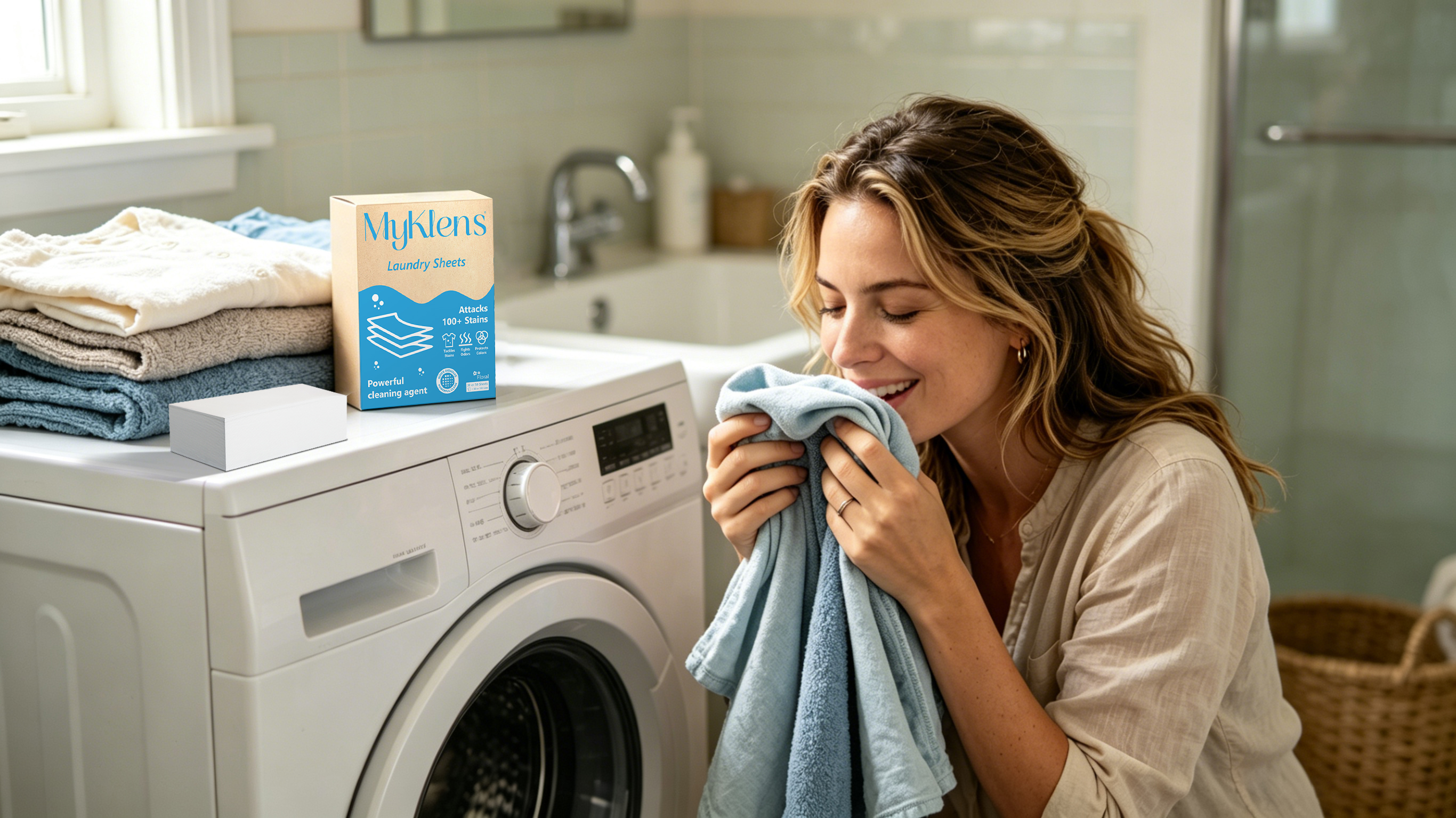
Forty minutes later, opening the machine revealed... impeccably clean, fresh-smelling garments. Zero residue. No lingering unpleasant smells. Simply clean.
My conversion was immediate.
The Unexpected Benefits Nobody Mentions
After half a year using exclusively sheet detergent, I've uncovered advantages extending far beyond typical product claims.
1. Simplified Decision-Making
This might sound excessive, but these sheets have genuinely reduced cognitive burden in surprising ways. Gone are:
Pre-wash detergent level anxiety checks
Remembering to purchase more during shopping trips
Mental calculations about whether supplies will last
Managing spills, drips, or container leaks
A single compact container lasts ninety days and occupies minimal drawer space. Laundry-related stress has virtually disappeared.
2. Liberation While Traveling
I maintain a demanding travel schedule for work, and sheet detergent has been absolutely revolutionary. I can pack ten sheets in carry-on luggage without security concerns. No more repeated outfit wearing or paying excessive hotel laundry fees. Whether staying in a Barcelona apartment or a Denver hotel, laundry capability travels with me effortlessly.
3. The University Student Solution
My cousin recently started university, and sheet detergent ranked among the most appreciated "secret weapon" items in her welcome package. Without vehicle access, transporting heavy traditional bottles presented genuine logistical challenges. Now she maintains a slim box in her laundry basket, and she's introduced countless hallmates to this approach.
4. High-Rise Living Advantages
My residence is a fifth-floor walk-up without elevator service. Sheet detergent means stockpiling supplies doesn't require dreading the stairway journey. A half-year supply weighs less than one traditional container.
The Performance Question: Does Science Support This?
Being naturally skeptical of marketing language, I investigated the underlying chemistry.
Detergent sheets utilize concentrated surfactants—identical cleaning compounds found in liquid and powder alternatives—delivered through a different mechanism. The sheets consist of biodegradable substrate (typically polyvinyl alcohol or PVA) that dissolves entirely in water, releasing active cleaning agents.
Key advantages include:
Precise pre-measurement: Eliminates overuse, protecting both fabrics and washing equipment
Zero unnecessary additives: Conventional detergents contain approximately 60% water; sheets are pure concentrated formulation
Cold-water compatibility: Most dissolve completely in unheated water, conserving energy
Minimal residue formula: Reduces buildup on clothing and within machines
Performance on difficult stains?
Complete honesty—for significant stains, I continue pre-treating with specialized removers. For everyday wear, routine dirt, and most common food stains, sheets perform identically to liquid alternatives. I've successfully washed everything from infant clothing to bedding to work uniforms.
Environmental Mathematics Worth Examining
Let's examine ecological impact, where sheet detergent demonstrates genuine advantages—and where marketing sometimes oversimplifies reality.
The Plastic Crisis
Typical households consume approximately 14-16 large detergent containers annually. That represents roughly 16 pounds of plastic, predominantly destined for landfills. Across ten years, that accumulates to 160 pounds per household.
Sheet detergent typically arrives in cardboard packaging or minimal paper wrapping. My preferred brand uses recyclable cardboard with minimal protective lining—total plastic consumption per wash is reduced approximately 95% compared to traditional containers.
The Transportation Factor
Something I'd never previously considered: because sheet detergent is exceptionally compact and lightweight, its shipping environmental cost is dramatically reduced. One cargo container accommodates twelve times more sheet detergent packages compared to liquid bottles.
Reduced weight equals decreased fuel requirements equals lower emissions.
Multiplied across countless shipments, the cumulative impact becomes substantial. Analysis by transportation researchers suggests switching from liquid to sheet formats could decrease delivery emissions by approximately 80% per unit.
The Water Paradox
Traditional liquid detergent contains up to 60% water. We're literally transporting water nationwide, burning fossil fuels to move something available from household taps. The absurdity becomes obvious upon reflection.
Surprising Discoveries Along the Way
Sensitive Skin Success
I manage sensitive skin and typically require "free and clear" formulations. I worried sheet options wouldn't accommodate this need. I was mistaken. Numerous brands offer hypoallergenic, fragrance-free variants that have proven gentler than some liquid alternatives. Zero reactions, zero irritation.
The Fragrance Exploration
Complete transparency: my first brand featured overwhelming artificial scent that I absolutely disliked. However, the marketplace has rapidly evolved. Now dozens of options exist—from completely unscented to subtle natural fragrances to conventional fresh scents. Success requires finding a brand matching personal preferences.
Hard Water Performance
I was concerned about performance with our area's notoriously mineral-heavy water. Surprisingly, results have been excellent. The concentrated formula appears to handle mineral content more effectively than anticipated.
The Honest Limitations (Nothing's Flawless)
In the interest of complete transparency, here are genuine disadvantages I've encountered:
1. Initial Price Point
Upfront costs can appear elevated. Sheet detergent boxes often cost $18-28, while inexpensive liquid alternatives might be $10. However, actual per-wash cost is typically competitive or lower because:
Accidental overuse becomes impossible
Zero product remains wasted in containers
True concentration delivers authentic value
Yet that initial purchase price can trigger hesitation.
2. Limited Physical Availability
You won't discover sheet detergent at every supermarket. I purchase mine online, requiring advance planning. For those preferring single-trip shopping convenience, this demands behavioral adjustment.
3. Psychological Adaptation
It sounds absurd, but there's genuine mental recalibration required. For substantial loads or challenging situations, my instinct remains to add extra detergent. With sheets, you simply... trust the system. Several washes are needed to believe one sheet genuinely suffices.
4. Brand Quality Variation
Not all sheet detergents are equivalent. I've tested nine different manufacturers, finding significant differences in:
Dissolution rate
Cleaning effectiveness
Scent strength
Packaging durability
This means experimentation may be necessary before discovering your ideal option.
Making the Transition: Actionable Guidance
If I've persuaded you to explore sheet detergent, here's how to ensure smooth adaptation:
Begin with Sample Sizes
Most manufacturers offer smaller trial quantities. Start there before committing to bulk purchases. Test them with your typical laundry to evaluate performance with your water quality, your machine, and your standards.
Maintain Your Current Supply Temporarily
Don't discard existing detergent immediately. Keep it available during your first several sheet washes as backup if anxiety arises. (Spoiler: you'll probably never need it.)
Study the Guidelines
Different manufacturers provide varying recommendations regarding:
Placement (directly in drum versus dispenser drawer)
Sheet quantity based on load size
Temperature preferences
Brief instruction reading prevents unnecessary frustration.
Calculate Actual Expenses
Retain receipts and determine genuine per-wash costs. You'll likely be pleasantly surprised.
Reserve Judgment Initially
Allow 4-6 washes before forming conclusions. The inaugural wash might feel unusual simply because it's unfamiliar.
The Broader Lesson: Questioning "How It's Always Been"
Here's what using sheet detergent has taught me beyond laundry itself:
We tolerate considerable inconvenience and waste as "standard" simply because we've never questioned alternatives. Heavy plastic containers, messy dispensing, wasted storage—we endure these frustrations because that's traditional methodology.
However, progress emerges when someone asks: "Could we improve this?"
Sheet detergent isn't perfect, and it's not universally suitable. But it represents something significant: willingness to reimagine everyday products in ways that better serve us, our households, and our environment.
Most Common Questions I Receive
"Compatible with high-efficiency washers?"
Absolutely. Actually ideal for HE machines due to low-sudsing properties and clean rinsing.
"What about fabric softening?"
Many sheet detergents exclude softeners. I use wool dryer balls instead, which perform excellently and last years.
"Suitable for hand washing?"
Definitely. Tear portions for smaller hand-wash quantities. Especially valuable when traveling.
"Septic system safe?"
Most brands are septic-friendly due to biodegradable ingredients, but verify specific products.
"Stain removal capability?"
For set-in stains, pre-treatment remains necessary. For fresh, typical stains, they perform admirably.
My Final Assessment
Six months ago, I simply wanted to avoid another detergent catastrophe. Today, I'm genuinely enthusiastic about a laundry product—a sentence I never imagined writing.
Sheet detergent has made my life measurably simpler. It's reduced waste, simplified travel, freed storage space, and decreased household management mental overhead.
Revolutionary? In life's grand context, no. We're still discussing laundry.
But a meaningful improvement over conventional options? Unquestionably.
Sometimes optimal innovations aren't flashy or dramatic. They're quiet improvements making daily existence slightly easier, slightly cleaner, and slightly more sustainable.
That Wednesday afternoon when detergent coated my kitchen floor? That was the final time I confronted that particular aggravation. Honestly, that alone justifies sheet detergent entirely.
Have you experimented with sheet detergent? What's been your experience? Share in the comments below—I'd genuinely appreciate hearing what has (or hasn't) worked for you.