For most homeowners, the toilet is the one area of the house where the battle against grime never truly ends. We’ve all seen it: the unsightly ring forming at the water line, the subtle buildup of limescale, and the persistent "bathroom smell" that lingers despite regular cleaning.
Enter the Toilet Cleaning Block. Often dismissed as a simple "freshener," these small but mighty tools are actually a feat of chemical engineering designed to bridge the "Freshness Gap"—the time between your weekly deep scrubs. But not all blocks are created equal. In this deep dive, we explore the science, the plumbing implications, and the future of automatic toilet maintenance.
1. The Chemistry of "Clean": How It Works Every Flush
To understand why a cleaning block is effective, we must look at what it’s fighting. Toilet stains are primarily composed of two things: Limescale (Calcium Carbonate) and Biofilm (Bacteria and Mold).
Surfactants: The core of any block. These molecules reduce the surface tension of the water, allowing it to "wet" the porcelain more effectively. This creates a microscopic barrier that prevents waste and minerals from sticking to the surface.
Oxidizing Agents: Many blocks contain slow-release oxygen or chlorine-based bleaches. These don't just mask smells; they break down the molecular bonds of organic stains, effectively "bleaching" them away before they become visible.
The pH Factor: High-quality blocks are formulated to balance the pH of your toilet water, neutralizing the acidic or alkaline nature of local "hard water" that causes stubborn crusting.
2. Form Factor: In-Tank vs. Rim Hanger vs. Gel Stamps
When choosing a solution for your home, the delivery method matters as much as the ingredients.
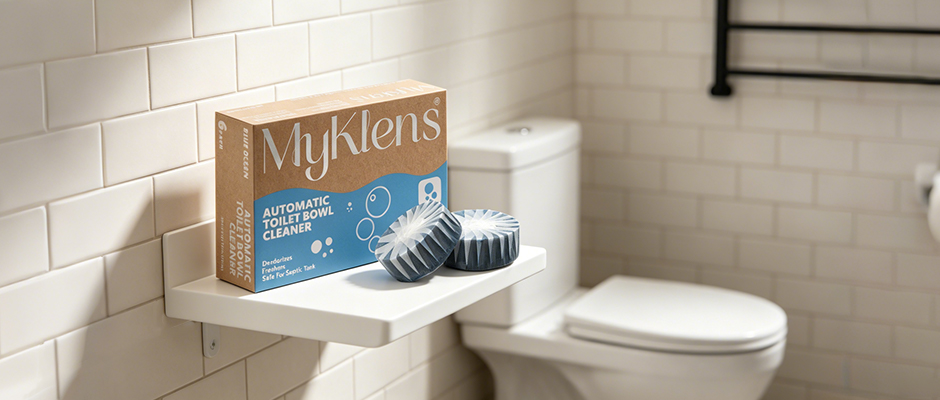
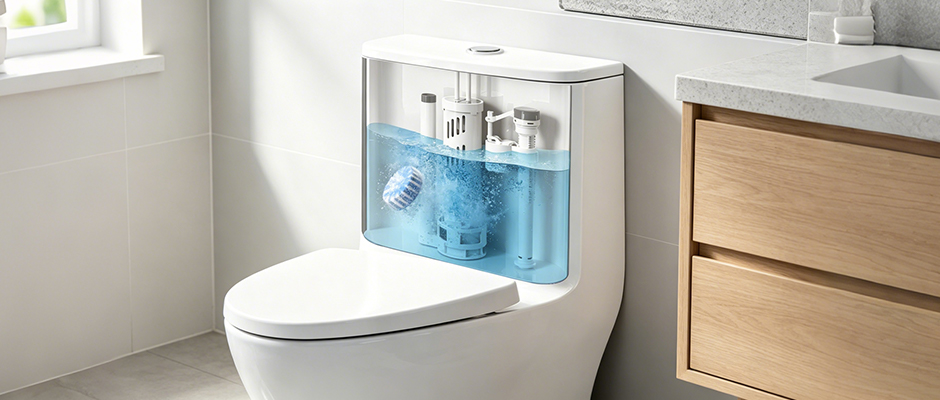
The In-Tank Tablet: These are the "set it and forget it" champions. They treat the water in the cistern, ensuring that every internal part of the toilet—including the flush rim—is sanitized. Expert Tip: Look for "Bleach-Free" versions if you are concerned about rubber flapper longevity.
The Rim Block: Positioned directly in the flow of the flush, these offer a concentrated burst of fragrance and foam. They are excellent for immediate odor control and preventing "ring" formation.
The Gel Stamp: The most aesthetic and hygienic option. By stamping a gel directly onto the bowl, you eliminate the plastic cage, reducing plastic waste and preventing the "re-contamination" that can occur with traditional rim hangers.
3. The "Plumbing Myth": Are Cleaning Blocks Safe?
A common concern among homeowners is whether automatic cleaners damage the toilet’s internal components. The truth lies in the concentration.
Cheap, high-chlorine tablets left in a guest bathroom that is rarely flushed can potentially degrade rubber seals over several years. However, modern, high-quality cleaning blocks are now formulated with corrosion inhibitors. They are designed to be "flush-activated," meaning the concentration of active ingredients remains at a safe level for both your pipes and the environment.
If you have a septic system, always look for the "Septic-Safe" label, which ensures the block won't kill the beneficial bacteria needed for your waste system to function.
4. The Modern Shift: Eco-Friendly and Aesthetic Maintenance
The "Blue Water" era is evolving. Today’s conscious consumer is looking for more than just a chemical scent. We are seeing a shift toward:
Essential Oil Infusions: Moving away from synthetic "mountain breeze" scents toward Eucalyptus, Lavender, and Tea Tree oils.
Biodegradable Formulas: Surfactants derived from coconut or corn that break down naturally in the water system.
Minimalist Design: Transparent or neutral-colored blocks that keep the bathroom looking sleek and "Scandi-clean" rather than filled with bright blue dyes.
5. Why You Need an Automatic Solution (The "Lazy" Benefit)
The real value of a toilet cleaning block isn't just a clean bowl; it's time.
By preventing the buildup of limescale and biofilm on a daily basis, you reduce the need for harsh, abrasive scrubbing. This preserves the porcelain glaze of your toilet, extending its lifespan and making your deep-cleaning sessions 50% faster.
A Small Change for a Cleaner Home
Toilet cleaning blocks are the "invisible janitors" of the modern home. By understanding the science behind them—surfactants, pH balancing, and slow-release technology—you can choose a product that doesn't just mask odors, but actively maintains your home’s hygiene.
Ready to close the "Freshness Gap" in your bathroom? Explore our latest range of [https://www.myklens.com/en/product/Toilet-Bowl-Cleaner-Tablets] designed for the modern, conscious home.