
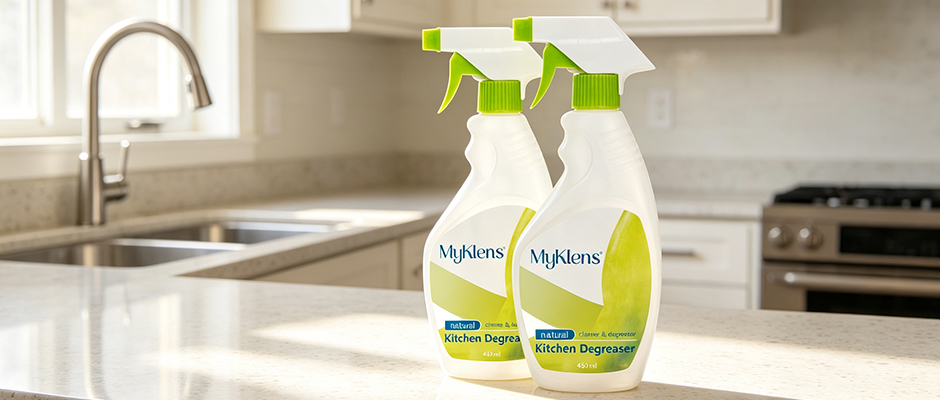
In a commercial kitchen, grease isn't just an annoyance—it's a severe fire hazard, a health inspection risk, and a massive drain on payroll. Standard retail cleaners won't cut it when dealing with polymerized grease that forms around fryers, grills, and ventilation systems.
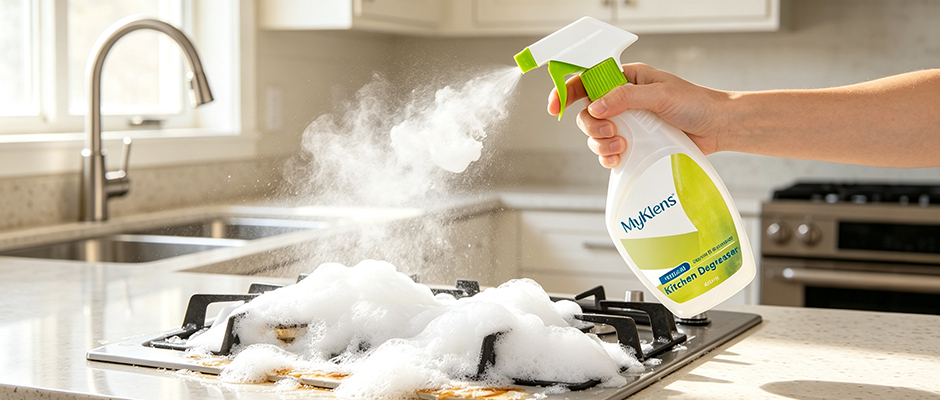
For restaurant owners, facility managers, and distributors, sourcing the right heavy-duty commercial kitchen degreaser is about more than just keeping surfaces shiny. It's about maximizing efficiency, ensuring compliance, and lowering the cost-per-use (CPU).
Here is exactly what procurement managers need to know before buying industrial degreasers in bulk.
Why Standard Cleaners Fail in Commercial Kitchens
Retail-grade cleaners rely heavily on water and mild surfactants. While fine for household countertops, they are useless against the grease found in high-volume restaurants.
Commercial kitchen grease, especially near fryers and flat-top grills, undergoes a process called polymerization. High heat bakes the grease into a hard, resin-like shell.
To break this down, a heavy-duty commercial degreaser requires:
High Alkalinity: A higher pH level specifically targets animal fats and vegetable oils, emulsifying them so they can be wiped or rinsed away easily.
Industrial Solvents: Safe but potent solvents that penetrate the hard crust of baked-on carbon.
Wetting Agents: Chemicals that allow the degreaser to cling to vertical surfaces (like range hoods) rather than dripping right off.
Key Factors to Consider When Buying in Bulk
When evaluating a new chemical supplier for your operations, look past the marketing labels. Ask your supplier about these three metrics:
1. Dilution Ratios (The Real Cost)
A common mistake B2B buyers make is looking at the price per gallon of the concentrate. What actually matters is the Cost Per Usable Gallon.
A $15 gallon of ready-to-use degreaser is vastly more expensive than a $40 gallon of hyper-concentrate that dilutes at a 1:40 ratio. High-concentration formulas reduce shipping weights, require less storage space, and dramatically lower your daily cleaning costs.
2. Surface Compatibility
Not all metals are the same. A highly caustic degreaser will strip the grease off an aluminum baking sheet, but it will also corrode and pit the aluminum itself.
Ensure the product you source is explicitly labeled as safe for stainless steel, aluminum, and cast iron, or know exactly where your staff is allowed to apply it.
3. Safety and Compliance
Health inspectors and fire marshals look closely at your cleaning protocols. Your supplier must provide an easy-to-read Safety Data Sheet (SDS). Look for products that are:
Low-VOC (Volatile Organic Compounds) to protect staff respiratory health.
Non-flammable.
Ideally NSF-certified for use in food preparation areas.
Top Commercial Applications
A versatile industrial degreaser should handle multiple zones in your facility to reduce the number of SKUs you need to inventory:
Exhaust Hoods & Filters: Foaming action helps the chemical cling to vertical surfaces to break down fire-hazard grease.
Fryer Boil-Outs: Breaking down carbon build-up inside the fryer vat extends the life of your cooking oil, saving thousands of dollars annually.
Kitchen Floors: Kitchen tile grout absorbs grease, leading to slippery, dangerous floors. A daily mop with a diluted degreaser eliminates slip-and-fall liabilities.
The Hidden ROI of Upgrading Your Chemical Supply
Think about the labor hours. If a stronger, more effective degreaser saves your closing shift just 20 minutes a night, that is roughly 120 hours of labor saved per year. Multiply that by your hourly wage, and the higher-quality degreaser pays for itself within the first month.
Furthermore, effectively degreased exhaust systems require less frequent professional scraping, and well-maintained fryers consume less energy to reach cooking temperatures.
Frequently Asked Questions (FAQ)
What is the best way to clean a commercial kitchen hood?
Spray a concentrated, foaming commercial degreaser directly onto the hood and filters. Let it dwell for 5 to 10 minutes to emulsify the grease, then wipe clean with a heavy-duty scrub pad and rinse with hot water.
Can I use an industrial degreaser on a flat-top grill?
Yes, but the grill must be cooled down to a safe temperature (usually around 150°F or lower) to prevent the chemical from flash-evaporating. Always rinse thoroughly with potable water before cooking.
Do you offer wholesale pricing for restaurant chains and distributors?
Yes. Purchasing in bulk (pallets, 5-gallon pails, or 55-gallon drums) significantly reduces your unit cost.
Ready to Streamline Your Kitchen Cleaning?
Stop wasting payroll on endless scrubbing and stop overpaying for watered-down retail cleaners. Upgrade to professional-grade formulas designed for the toughest culinary environments.
[Contact Our Wholesale Team Today] to request a custom quote, bulk pricing options, or a product sample for your commercial kitchen.